
Museum Writing Guide
Volume 1

One of the best gifts I gave myself was membership to the Art Institute of Chicago [AIC] soon after I arrived back in Indiana. A day at the museum is one of my favorite artist dates. This year I added a work day at the museum once a month with a friend. I attend the Writing in the Galleries events hosted by the Department of Interpretation. I have gathered a group of regular attendees to the writing events outside of the museum. It is a joy and full process.
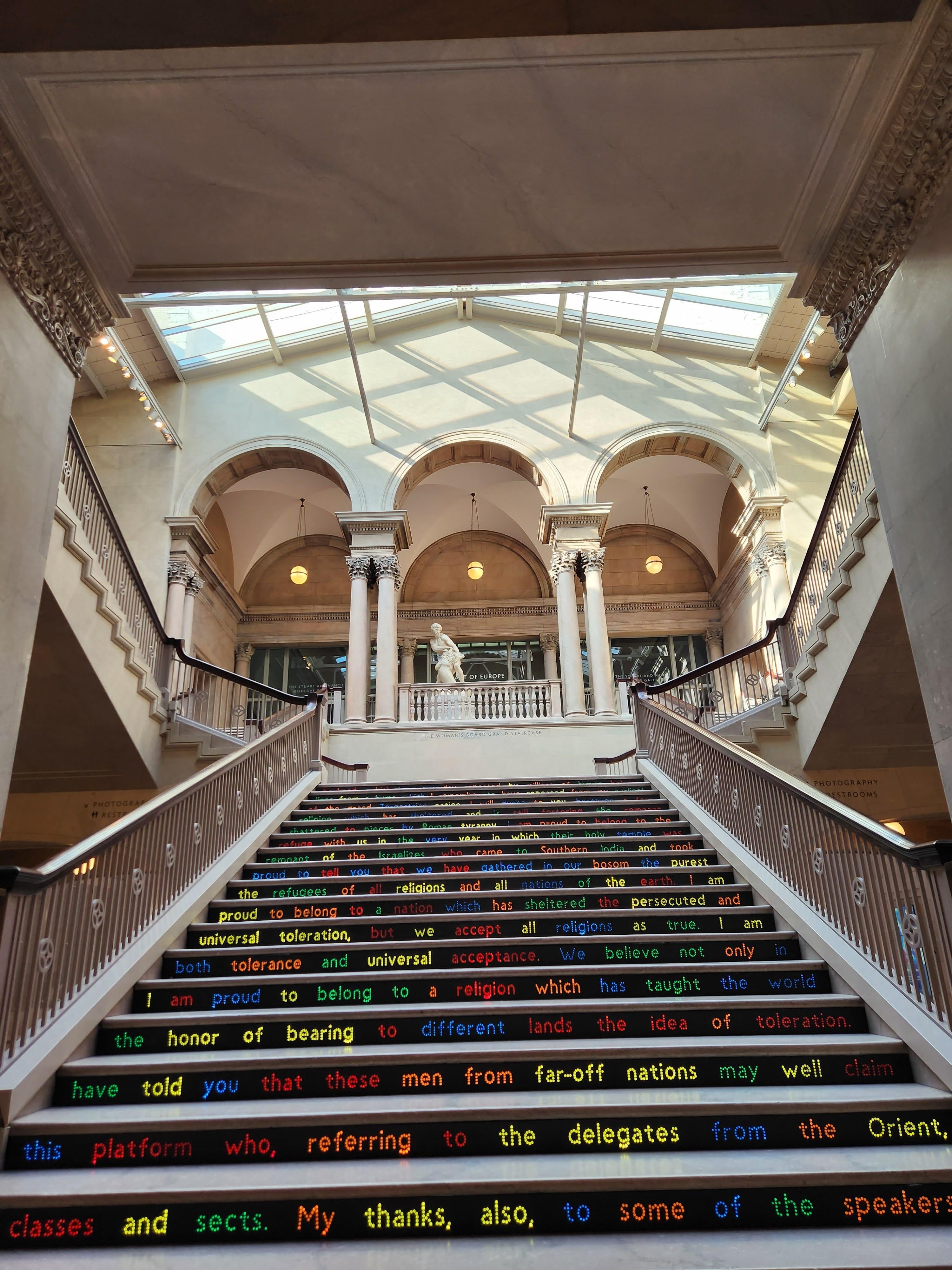
This year, I assign myself a specific writing/ creative task for each new visit. I want to share these in a structured way to help you on your own artist date if you need ideas.
I make a lot of notes throughout my daily life, but noticed I was rushing in the museum. I would not allow myself to capture a feeling or thought or story idea in enough of an extended way. When I would try to write it later at home, it felt like a dream I have the impression of, but couldn’t remember the details.
The prompts I will share with you help me to keep clarity of the inspiration I have in the galleries.
Think of these prompts as a menu of options you can mix and match from to create your own personalized experience.
Materials:
Find a notebook that feels easy to write in for you while standing up. Seating is usually at a minimum at art galleries. I have a hard-backed landscape notebook gifted to me from my dear friend Mereydth. I also use Field Notes notebooks. They fit in my hand and I can cup them easily.
Find a pencil that does not cramp your hand. Pens are not allowed in art galleries. I had to switch to a higher-quality, thicker barreled mechanical pencil for my visits. These Papermates are the ones I use.
Visit One
General Guidelines for every visit:
Do as much writing in front of the art as you can; resist the urge to save it for later.
If you like the language/cadence/phrasing of a label, take a photo.
Pay attention to the people in the gallery. Sometimes the people watching the art is more interesting than the artwork.
Write down snippets of conversation. I hear all kinds of serious life conversations in the member lounge. There are more observations of the art in the galleries in my experience.
If a class comes into the gallery - eavesdrop. If the instructor gives an assignment to her students, write it down and consider it for yourself.
Consider what assignment you would give yourself in response to the art you are looking at? Make a scultputre? Collage? Write a paper?
Take the tour! There is always something interesting that comes up from these experts.
Pull words that sparkle to you off the labels. Make a list on one page in your notebook. I have done this with nouns and verbs specifically as well.
The Self Assignment
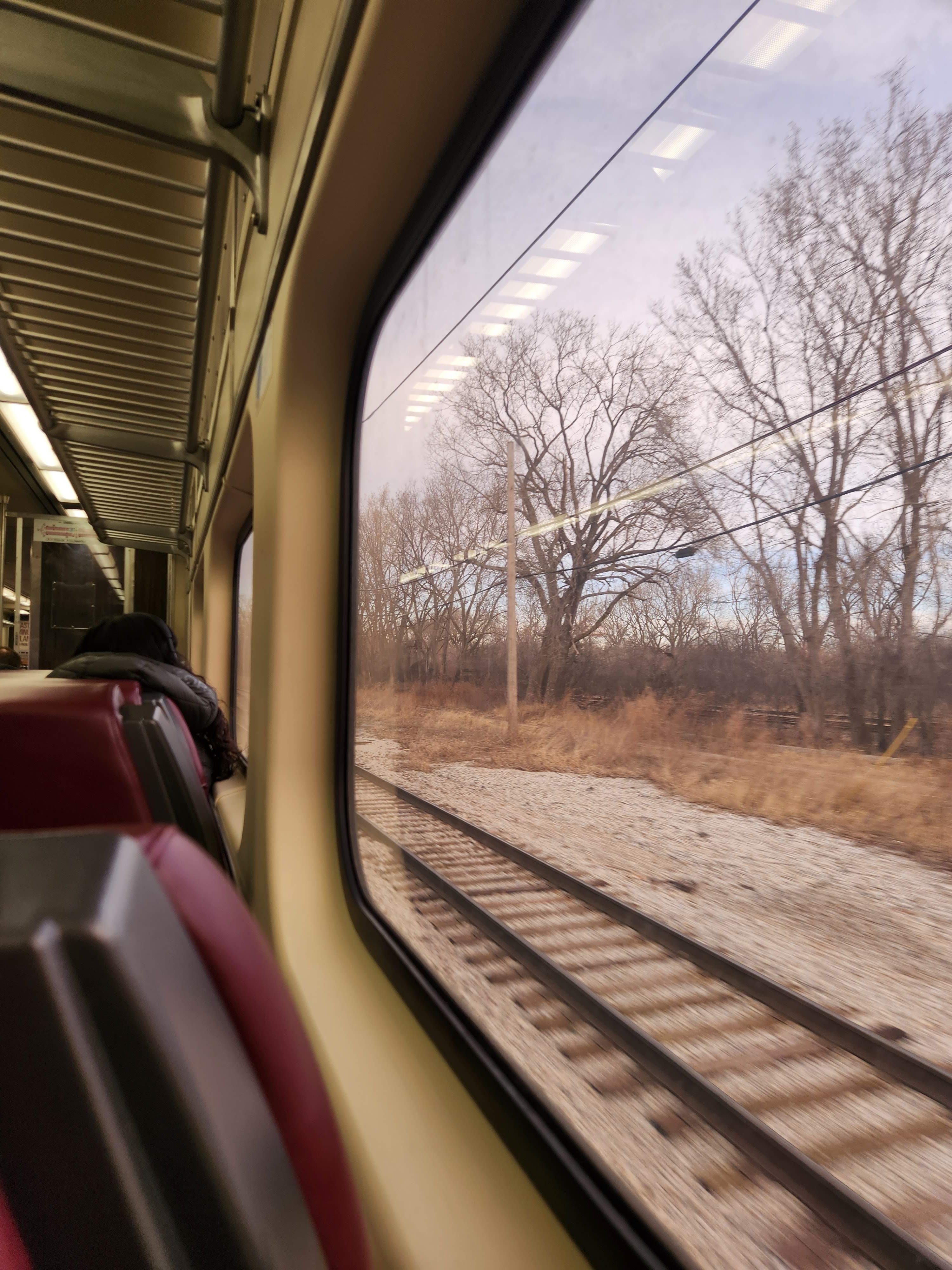
My artist date begins at the train.
I have an idea of what I want to do before I go. I want to be open, but have a plan. I can divert from the plan, but don’t want to flail. On the hour ride, I think about where I want to start in the museum.
I freewrite on the train. Listen to other people’s conversations. Note what people are bringing on the train. I won’t remember later, so I write it down.
Member Hour
I am a member of the museum, so I get to visit the galleries one hour before anyone else. This allows me to see the new installations without crowds in most cases.
For new installations, I make a round, and then focus on one piece that is calling to me that day.
When the Symbolist exhibit was open, I spent a lot of time with Medusa. I wrote a whole scene in my novel about this experience.
When I first started attending the museum regularly, I would try to cram as much art into the day as possible. There is a time and place for this strategy, but I find now hyperfocusing on a few pieces and looking at them longer feels more fruitful.
Assignment #1
In addition to making notes of the impressions that come to mind that day while standing in front of a piece, I wanted to use the inspiration as a direct path to a flash piece.
Three Sentences -
A sentence about something I see. [This may be an image, an impression, or an interaction between subjects in the piece.]
What is my emotional reaction?
A sentence that hints at what is next.
I make sure to note tension and ask, “What small trouble is hiding here?”
A slightly different structure:
One moment
One action and
One exchange.
The last visit, I had 9 of these trios.
But here is the thing. These three sentence story starts, glimmers if you will, are enough. You don’t have to make them anything more.
Take a Break
We often underestimate the energy required for cognitive work. This day is meant to be inspirational and enjoyable. Take a break when you need it. Get a coffee, stay hydrated. Sit in the member lounge. Enjoy the time.
More soon!
A little more about me: Tammy L. Evans is a writer, teacher, and professional curator living in a tiny house on a peninsula with her husband , fuzzy adventure cat, and a parkour-loving black kitten. Her location device is her loud laugh. She is the creator and host of THE TRIO COURSE. Her poetry has been published in The Storyteller, FoxGlove Journal, Story Hall, Blue Insights, The Partnered Pen, and others. Her fiction has been published in Gone Lawn, South Florida Poetry Journal, Cabinets of Heed, Spelk, Five on the Fifth, Fiction Berlin Kitchen, and longlisted for the Welkin Prize 2026.
Thanks for sharing this. Writing and reflecting in museums has been a favorite activity for me since my 20s. Love discovering a little community that does this 🎨